TL;DR Healthy conflict in relationships means two people can disagree, even loudly, and still feel respected, safe enough to say what they mean, and able to find their way back to each other afterward. Emotional harm shows up when the fights leave one or both of you feeling small, afraid, or alone and nothing gets repaired. If you keep having the same fight and can't tell whether you're in a rough patch or something that is wearing you down, three markers can help you sort it out: tone, safety, and repair.
I'm a licensed psychologist and EFT couples therapist in Seattle, and the couples I see are rarely villains. Most are two caring people whose nervous systems get activated at the same moment. Below I cover what healthy conflict looks like, how to spot emotional harm, what repair involves, and when couples therapy fits.
What is healthy conflict in a relationship?
Healthy conflict is disagreement in which both partners stay respectful, say what they need, and reconnect afterward, even when the conversation gets heated. Dr. John Gottman's research found that the difference between happy and unhappy couples was the balance of positive and negative moments during a disagreement, about five positive for every negative, and that stable couples repair quickly after the negative ones. Healthy fights can include raised voices, tears, and frustration. They leave out contempt, and they include a way back.
How can you tell healthy conflict from emotional harm?
Emotional harm is a repeated pattern of contempt, intimidation, control, or dismissal that leaves a partner feeling unsafe, diminished, or afraid and that does not get repaired. It can happen without anyone intending it, which is why the pattern matters more than any single bad night. The table below sets the three markers side by side, and my post on whether it's a red flag or a trauma trigger covers telling a harmful pattern from nervous system activation.
| Marker | Healthy conflict | Emotional harm |
|---|---|---|
| Tone | Frustrated or loud at times and still respectful, with complaints aimed at the issue | Contempt, mocking, name calling, or eye rolls aimed at who you are |
| Safety | You can say what you think and feel without fearing punishment, retaliation, or being shut out | You edit yourself, avoid topics, and brace for a reaction |
| Repair | One or both of you reach back within hours or a day, apologize, or reconnect | Nothing gets repaired, the apology turns into blame, or you hear that you're overreacting |
Tone
Raised voices alone do not make a fight unhealthy, and contempt does. Mocking and name calling tell your nervous system that your partner holds you in low regard, and the body registers that as a threat.
Safety
Notice whether you can say the true thing. If you rehearse sentences in the shower, soften every request, or steer around topics that always blow up, your body is telling you what speaking up costs. That is walking on eggshells, even if nobody has ever yelled.
Repair
Every couple has bad moments, and the couples who stay close come back to them. Repair can be small, like a hand on a shoulder or "that came out harsher than I meant." Harm looks like three days of silence, or an apology followed by "but you made me do it." My post on why apologies don't always fix it covers what to do when the apology is sincere and the tension stays.
Why do well-meaning partners still hurt each other?
Under stress, your nervous system takes over before your values get a vote. When something your partner says registers as criticism or distance, your body can move into fight, flight, freeze, or fawn within a second or two. One partner gets louder, the other goes quiet, and each reaction confirms the other's fear, the same cycle I describe in why the same argument keeps happening.
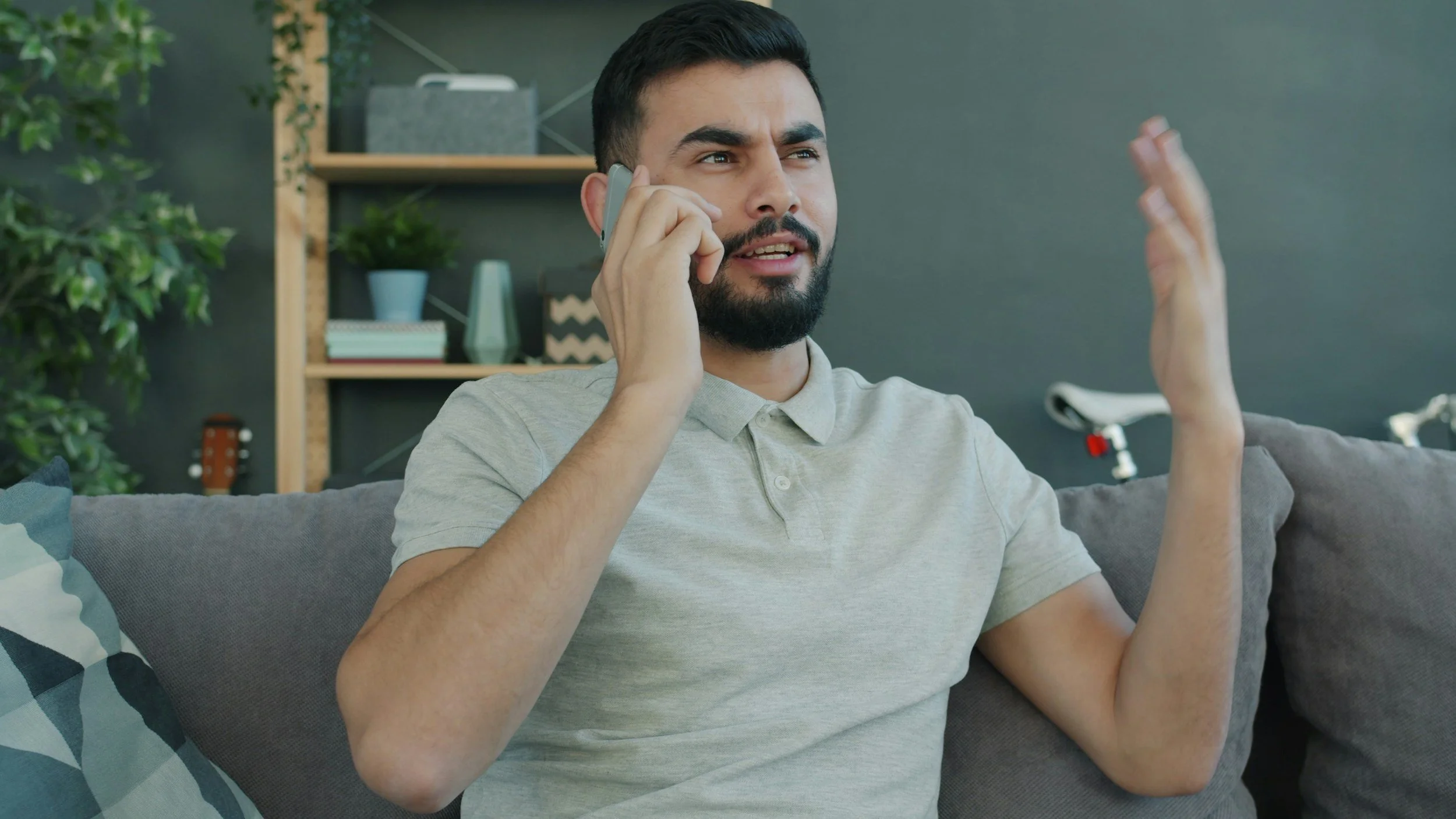
In my office there are no good guys and bad guys, only two people protecting themselves in a dance neither one wants to be doing.
Understanding that does not erase the impact of what was said, and impact still deserves repair.
What if you minimize it or walk on eggshells?
"It's not that bad, other people have it worse" is one of the most common things I hear. Comparison gives you a reason to dismiss your own experience, and the better measure is what happens in your body. If you dread certain conversations, feel smaller after fights, or spend more energy managing your partner's reactions than sharing your own, that deserves attention at any level of severity.
Walking on eggshells often goes unnoticed because nobody has done anything dramatic. The partner on the other side may feel they can never get it right, and both positions wear people down.
Why doesn't knowing what a healthy fight looks like help in the moment?
Most people I work with can describe a healthy argument. They know to use a calm tone, take a break, and listen. Then the fight starts, their heart pounds, and the knowledge goes offline. Knowing lives in the thinking part of the brain and the alarm lives in the body, and that gap between what you know and what you feel is where the work happens. I work with the nervous system directly, using Brainspotting and EMDR alongside EFT, so the calm you can describe becomes calm you can feel. The same gap shows up in my post on why letting go feels so hard.
What does repair after an argument look like?
Repair after an argument is the act of reconnecting once the heat has passed, so both partners feel seen and the relationship feels safe again. It usually has three parts:
Settle your body first, because a flooded nervous system cannot listen, and that often takes longer than people expect.
Name what you contributed and what the moment was like for you, as in "I got sharp and cut you off, and I think I felt ignored."
Say what you need next time and ask your partner for the same.

Repair does not require agreeing on who was right.
When is this a different conversation than couples therapy?
Couples therapy fits partners who are stuck in a painful cycle and want to change it. If you are afraid of your partner, or there is physical violence, threats, stalking, or control over your money, your movement, or who you see, that calls for a different conversation, and joint sessions can raise the risk. The National Domestic Violence Hotline has advocates available around the clock at 1-800-799-7233 and by live chat. If you reach out to me, I will tell you plainly whether couples therapy is the right fit.
How does EFT couples therapy help?
In Emotionally Focused Therapy I help you and your partner see the cycle itself, the pattern that takes over once you are both activated, so you can step out of it together. We slow down the moments that blow up, name what sits underneath the anger or the silence, and practice reaching for each other in ways that land. ICEEFT reports more than 30 years of peer reviewed outcome research on EFT, and results vary from couple to couple. I never promise that a couple will stay together or separate, and you will still disagree sometimes. This work is open to couples of every identity and structure, including LGBTQ+, polyamorous, and cross-cultural partnerships, and couples who want more room than a weekly hour allows can choose an EFT couples intensive. You can read more about couples therapy in Seattle on my services page.
What can you try this week?
Small experiments tend to go better than big talks. Start with a pause word you both agree on, like "pause," that either of you can use to stop a fight and return to it within a few hours. Next, notice your first body cue of activation, such as a tight jaw, a hot face, or going blank, and name it out loud. After the next argument, try one repair line, like "that came out sharper than I meant, can I try again." If trying these leaves you feeling more afraid, that is worth bringing to a therapist.
Start with a consultation
If you recognize your relationship here and want to find out whether your dynamic is workable, I offer EFT couples therapy in person in Seattle and online across Washington and Oregon. You can start with a consultation, and we will talk through whether couples therapy, an intensive, or a different kind of support fits, and you are welcome to reach out whenever it feels right.
Frequently asked questionsCode
What is healthy conflict in a relationship?
Healthy conflict is disagreement in which both partners stay respectful, say what they need, and reconnect afterward. Voices can rise and feelings can run hot. Three markers set it apart: a respectful tone, enough safety to speak openly, and repair after the fight.
How do I know if it's emotional harm or just a rough patch?
A rough patch carries stress, and the tone stays mostly respectful, you can speak openly, and repair happens. Emotional harm is a repeated pattern of contempt, intimidation, control, or dismissal that leaves you feeling unsafe or small and does not get repaired. The pattern over weeks and months says more than any one bad fight, and a therapist can help you sort out which one you are in.
What are the signs of emotional harm in a relationship?
Common signs include contempt or ridicule, walking on eggshells, being told you're overreacting when you raise a concern, apologies that turn into blame, and feeling smaller or more alone after conflict. No single sign proves harm, and the pattern is what matters. If you are afraid of your partner, call the National Domestic Violence Hotline at 1-800-799-7233.
How do you repair after an argument?
Let your body settle first, then name what you contributed and what the moment was like for you, and say what you need next time. Small reaches count, like "that came out harsher than I meant." Repair does not require agreeing on who was right.
Can couples therapy help if we keep having the same fight?
Often it can, when both partners want to change the cycle. In EFT couples therapy I focus on the pattern between you and not on who is to blame. Results vary, and I never promise that a couple will stay together or separate.
Is couples therapy safe if one partner is afraid of the other?
Couples therapy is not the right starting point when one partner is afraid of the other, or when there is violence, threats, or control, because joint sessions can raise the risk. Individual support and the National Domestic Violence Hotline at 1-800-799-7233 are better first steps. If you contact me, I will tell you plainly whether couples therapy is a fit.
Do you offer couples therapy in Seattle and online?
Yes. I offer EFT couples therapy in person in Seattle and online for couples across Washington and Oregon, including couples intensives. You can start with a consultation to talk through what fits.

About the author
Amanda Buduris, Ph.D., Licensed Psychologist is a licensed therapist with over 10 years of experience supporting clients in Seattle, Washington. She specializes in trauma recovery, couples therapy, and attachment-focused work, and uses evidence-based approaches like EMDR, Brainspotting, IFS, and Emotionally Focused Therapy (EFT) to help clients heal from past trauma, improve relationship dynamics, and build emotional resilience. At PNW Psychological Wellness, she is committed to providing compassionate, expert care both in-person and online for clients across Washington, Oregon, and 42 other states through PSYPACT.